Feedback is the most powerful learning tool we have
Why high-quality feedback is one of the strongest drivers of student achievement, and how WISEflow's feedback, rubrics and marking tools put it into practice.
When we talk about learning, feedback is not just an add-on. It is the single most important tool for growth. For students, feedback transforms assessment from a static judgement into a dynamic learning experience. It turns an exam from being “just a test” into a meaningful part of the learning journey.
Research underscores this: feedback has one of the highest impacts on student achievement among all teaching strategies. Meta-analyses by Hattie and others show effect sizes ranging from 0.48 to 0.70, meaning feedback can accelerate learning significantly compared to traditional methods. High-quality, actionable feedback improves motivation, engagement, and attainment, while vague or delayed feedback risks demotivation and disengagement.
Feedback in WISEflow is equal to flexibility, consistency, and depth
At UNIwise, we believe feedback should be structured yet adaptable, enabling assessors to provide insights that truly matter. Our platform, WISEflow offers multiple levels of feedback, from simple comments to advanced rubrics that ensure consistency and transparency across assessments. Rubrics empower assessors to articulate expectations clearly, while giving students a roadmap for improvement.  But flexibility is equally important. WISEflow allows assessors to tailor feedback to the context whether it’s a quick formative note or a detailed summative evaluation. This freedom ensures that feedback is not constrained by rigid systems but shaped by pedagogical intent.
WISEflow functionalities: feedback, rubrics, marking and offline marking
WISEflow offers a comprehensive suite of tools to support assessors and enhance the student experience:
Feedback tools
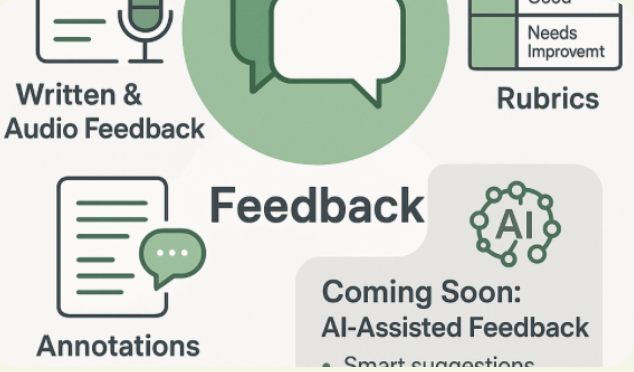
Assessors can provide written comments, annotations directly on submissions, and even audio feedback. Common feedback can be shared across multiple students, while individualised comments ensure personalised guidance.
Rubrics
Rubrics make expectations explicit and promote fairness. They provide clarity for students, consistency across multiple markers, and efficiency in grading. Rubrics can be linked to learning outcomes and used for reflective practice. Assessors can also complete rubrics offline, ensuring flexibility when internet access is limited.
Marking tools
The marking tool streamlines workflows, allowing assessors to enter grades, annotate submissions, and share feedback seamlessly. It supports moderation and bulk grade submission for large cohorts.
Offline marking
When connectivity is an issue, WISEflow enables assessors to download submissions and grade sheets, mark offline, and upload annotated files and grades back into the platform. Rubrics can also be included in offline packages, ensuring consistency even when working without internet access.
Looking ahead: AI-assisted feedback
The future of feedback is intelligent. We are working on AI-assisted feedback capabilities that will help educators deliver feedback that is not only faster but also more consistent and insightful. AI will never replace the human touch, but it can support assessors by suggesting patterns, highlighting gaps, and ensuring fairness across large cohorts.
This innovation will enable educators to focus on what matters most which is guiding students towards a deeper understanding and mastery.
Making exams part of the learning process
Assessment should never be a dead end. Exams must be integrated into the learning process, serving as opportunities for reflection and growth. Feedback is the bridge that makes this possible. By choosing a platform like WISEflow, institutions can ensure that assessments are not isolated events but integral steps in a continuous learning journey.
In short: Feedback is not optional, it is essential. And with WISEflow, educators have the tools to make feedback flexible, consistent, and impactful, now and in the future.
We are here to help
Whether you are just starting with digital assessment or want to get more out of it, we are happy to share how other institutions run it in practice. Please reach out or request a demo.

Frequently asked questions
Research shows feedback has one of the highest impacts on student achievement, with effect sizes between 0.48 and 0.70. High‑quality, timely feedback improves motivation, engagement, and long‑term learning—turning assessments into meaningful learning opportunities instead of one‑off evaluations.
WISEflow includes advanced rubric tools that clearly communicate expectations, ensure fairness across markers, and streamline grading. Rubrics also link to learning outcomes, helping students understand how their performance aligns with academic goals.
Assessors can use written comments, annotations directly on student submissions, audio feedback, and reusable comment banks. This enables both personalised guidance and efficient workflows for large cohorts.
WISEflow stands out by offering a unified solution for the entire sector, strong integration with Student Information Systems (SIS), flexible exam formats, and a structured onboarding process. UNIwise acts as a strategic partner rather than just a vendor.
Offline marking allows assessors to download submissions, grade them without internet access, and upload grades and annotations later. Rubrics can also be used offline, ensuring flexibility and continuity even in low‑connectivity environments.
A unified solution improves efficiency, creates consistent processes, and enables mobility across institutions. It makes it easier for students and staff to work across campuses and ensures that new features benefit the entire sector.
AI-assisted feedback in WISEflow will help educators draft consistent, high‑quality comments by identifying patterns, highlighting gaps, and supporting fairness across large groups. Humans remain in control, while AI reduces workload and strengthens the quality of feedback.