Aligning with higher education institutions: reflections from the JISC assessment future scenarios workshop
Insights from the JISC assessment future scenarios workshop: what blocks and drives change in higher education, and the challenge of authentic assessment.
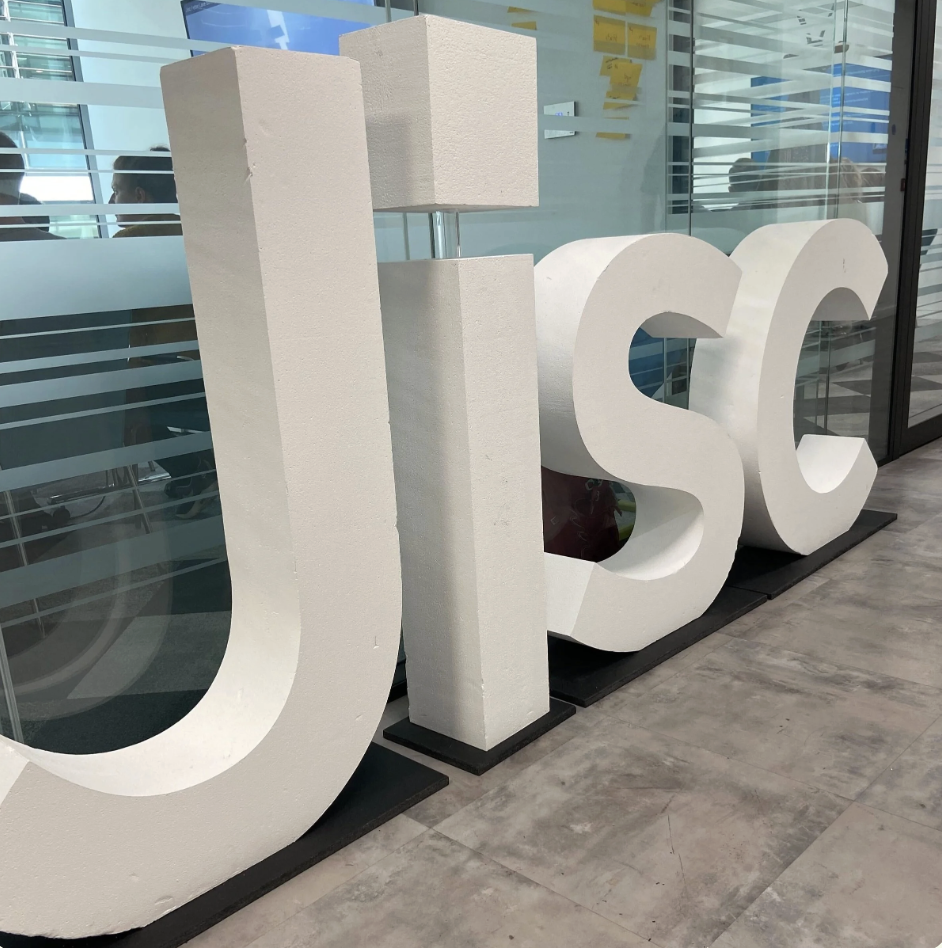
Context On 8 June UNIwise had the pleasure of attending a workshop, at the JISC offices in central London, that speculated on future scenarios of assessment. The workshop featured HE professionals from institutions such as UCL, Birmingham City University, University of Nottingham, Manchester Metropolitan University and University of Reading.
The workshop included future-gazing exercises, with Paul Bailey, Head of Co-Design at JISC, presenting a ‘pre-mortem’ to the group. This involved teams imagining a scenario in which a project, or organisation, had already failed in its implementation. Project teams then had to work backwards, and determine the factors and blockers that could have led to such a failure.
The pre-mortem was as follows: ‘It is 2035 and despite the take-up of digital assessment, many universities have retained traditional exams. Course work assignments are seen as unreliable due to the dominance of contract cheating. Academics are over-worked with all the marking and feedback. Employers are not satisfied with students’ employability skills. What went wrong? What challenges and drivers got us here?’
Following this, project teams considered different types of assessment they would like to see in the future – ranging from the perceivable to ideas that would require a ‘large-scale rethinking of education’.
For more details on the activities that took place throughout the day, and the main takeaways from the workshop from an academic perspective, see Marieke Guy’s blog post here. Paul Bailey also followed up this workshop with some further reflections - these can be found here.
Blockers and drivers
The pre-mortem approach helped us to better understand some of the struggles HE institutions have today, as well as what they perceive to be blockers to academic and assessment-based progress.
One of the most frequently identified blockers came in the form of professional, statutory and regulatory bodies (PSRBs) and quality assurance for examinations that lie outside of the control of universities. PSRBs ‘engage with the higher education sector through the approval, recognition and accreditation of HE programmes’. These PSRBs can often be political bodies, as well as conservative, and play a significant part in driving the design of exams – including formative assessment.
Those sitting examinations will always act in accordance with how they are being measured. When PSRBs direct forms of assessment, despite existing outside of the HE sector, universities are more likely to align with traditional examination techniques. This remains the case even if an institution feels detached from an assessment style, and students must be trained accordingly.
The misalignment between a university’s desire to change and the PSRBs often conservative regulations can frequently cause issues. These differences form the basis of many of the blockers that were identified by HE institutions at the workshop.
Another blocker that was identified was a lack of perspective on what is labelled as ‘authentic assessment’. There seems to be a desire for universities to look towards more vocational aspects of education. The reluctance to make this move, however, is based on a lack of understanding, what separates universities from vocational institutions, focusing on workplace education? Education is now free and open, and not simply a place for the elite; authentic assessment needs to be in place to accommodate this.
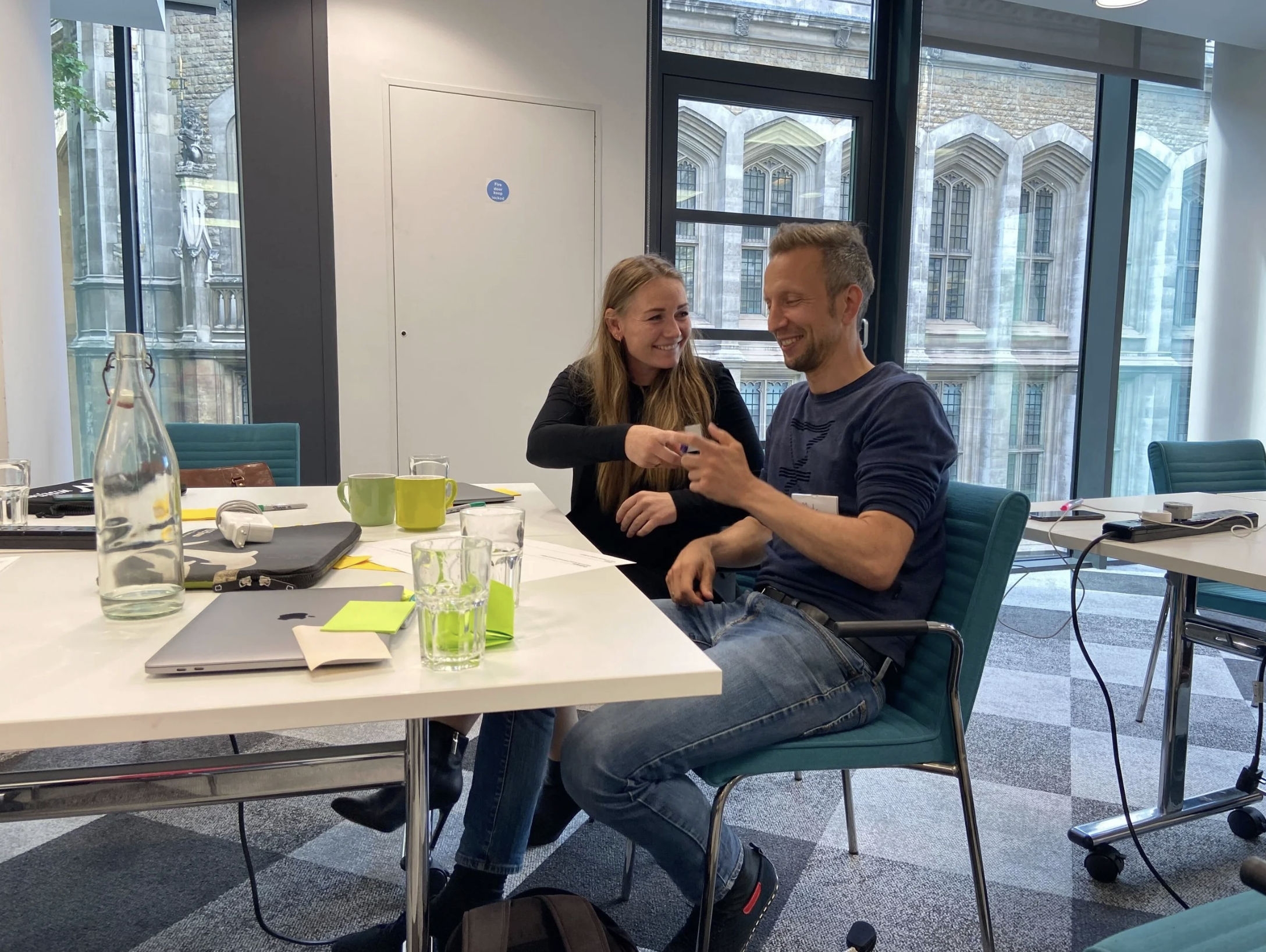
UNIwise colleagues Rikke and Mads discussing potential new assessment types
at the JISC assessment future scenarios workshop
While UNIwise already had an understanding of these blockers, it was both interesting and insightful to have them confirmed. There was also an acknowledgement that those who drive education, in reality, want fewer exams. However, we operate within a society that is pre-occupied by testing, and we have to understand that exams are a central quality measure.
Beyond simply discussing what HE institutions consider to be blockers to progress, it was also important to understand what it is that drives universities. It was clear that there is a genuine wish to make exams and assessment more of a learning process. This would involve institutions gaining a better understanding of feedback, ensuring the involvement of students, guaranteeing more peer feedback, enabling greater personalisation and allowing more individualisation, in terms of exams and assessments.
To put it simply, students should be able to influence assessment prior to their exams. Bringing personalised interests to the table does not need to degrade examinations; it can instead increase engagement and ensure better delivery. This was a big driver for institutions.
The importance of alignment
The workshop was valuable in informing UNIwise of both drivers and blockers. Only with an appreciation of both of these can we ensure we are aligned with HE institutions. Having key understandings of how and why universities operate, and identifying their desires going forward, helps to inform the types of discussions we have with our clients.
“We want to play a part in shaping the future of assessment.”
The workshop was made particularly useful through the attendance of various HE professionals. Having meaningful discussions with individuals working at different levels across institutions allowed for a greater number of perspectives to be heard. This ensured that discussions were never detached from reality and remained representative of the sector.
Taking an active role in discussions with HE institutions, outside of contractual negotiations, was a great experience. Rasmus Blok, Co-founder and Executive Director at UNIwise, commented that ‘the workshop offered a great opportunity to align ourselves with HE institutions, and ensure that we understand not only what drives universities, but what they consider blockers. UNIwise intends to continue in this vein going forward, partnering with organisations such as JISC to ensure that we are delivering an informed and high-quality service for all our customers. We want to play a part in shaping the future of assessment.’
We are looking forward to the follow-up online workshop on 7 July, where we will be looking further at the questions which were raised during our time at the JISC offices, as well as asking ourselves: ‘what needs to be done next?’.
We are here to help
Whether you are just starting with digital assessment or want to get more out of it, we are happy to share how other institutions run it in practice. Please reach out or request a demo.

Frequently asked questions
The workshop brought together higher‑education professionals to explore possible future scenarios for assessment, identify sector challenges, and discuss what universities need from digital assessment systems in the years ahead.
A pre‑mortem imagines a future scenario where a project has already failed and asks participants to work backwards to identify what caused the failure. In this workshop, teams examined why assessment might fail by 2035 despite digital uptake, highlighting systemic blockers across HE.
Participants named several barriers, including restrictive professional, statutory and regulatory bodies (PSRBs), conservative exam frameworks, lack of clarity around authentic assessment, and tension between traditional testing models and evolving student needs.
Universities want assessment to support deeper learning: more meaningful feedback, improved student involvement, personalised pathways, authentic assessment formats, and reduced overreliance on high‑stakes exams.
Understanding both the blockers and drivers shaping institutional decision‑making helps UNIwise design solutions, support customers effectively, and contribute to sector‑wide discussions on the future of assessment.
UNIwise reaffirmed its commitment to partnering with HE institutions beyond contractual relationships, engaging in sector dialogues, understanding emerging needs, and helping shape sustainable, student‑centred assessment practices.