
The rubrics module in WISEflow
How the rubrics module in WISEflow supports transparent, consistent assessment with structured criteria, weighted scoring and integrated feedback.
As an introduction to our new Rubrics module in WISEflow, our Executive Director Rasmus Blok made some videos explaining what the Rubrics module is and how it works (Part 1) and what the advantages of using Rubrics are (Part 2).
Part 1 - what are rubrics?
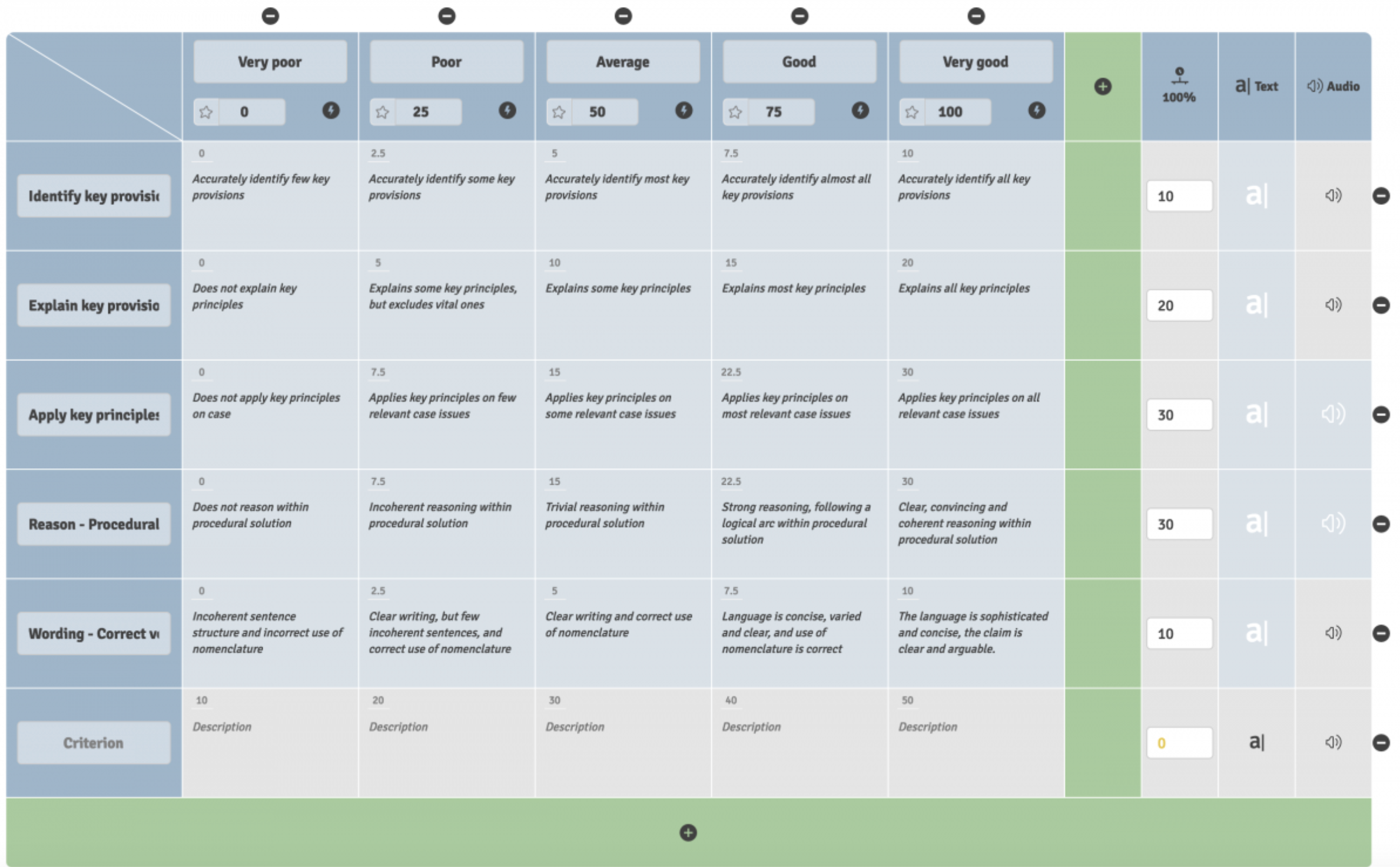
Rubrics in the WISEflow author module is an assessment matrix – a guide for the future assessment of an exam, formalised in a spreadsheet.
A basic rubric will have two axes: a vertical axis consisting of criteria and a horizontal axis consisting of values to signal compliance with a given criterion. Each criterion can be weighted differently, according to how much the criterion matters in relation to the final grade. For example, application of relevant theory can be valued at 30 %, while wording only accounts for 10 % of the final grade
In this video our Executive Director Rasmus takes you through our new Rubrics module and how it works.
The rubric can be customised according to the specific exam you wish to assign it to. Criteria can be written in accordance with the learning outcomes of the course and the values can be customised to exactly the amount of increments you want.
As you assign a specific value to the student’s performance, you can also add comments to that square in the grid, detailing the specifics of why the student received this appraisal for that specific criteria. This feedback can be given both orally and in text-format, by either recording the feedback or writing it.
As you fill out the rubric, a score will automatically be calculated according to the scale running along the horizontal axis. This score can then be translated to a grade. What score equals what grade is completely customisable with our grade mapper, which allows you to adjust the grade on a sliding scale.
Part 2 - the advantages of rubrics
By using Rubrics as a way to formalise the assessment of an exam, you gain some significant advantages.
When the rubric is filled out, it can be shared with the student, so the student can see how they performed according to the singular criterions and what the feedback for this specific part was.
Rubrics can increase the transparency of your assessment process. As a rubric can be shared beforehand with the students, they know exactly what criteria they are being assessed on and what is most important before they sit their exams.
In this video our Executive Director Rasmus explains some of the many advantages of using the Rubrics module in WISEflow
Another advantage of using Rubrics is consistency. By formalising the criteria of the assessment in the rubric, you make sure that they are only assessed on those criteria for each exam. The students are not assessed on any criteria that are not in the rubric and all students are assessed on the same set of criteria.
Using a rubric also provides a structured feedback – both for the assessed students and the assessor. For the student, the feedback is structured visually, as they can see what criteria they are assessed on and how they performed on the individual criteria, so they know where they performed well and where they need to increase their efforts in the future. For the assessors, they can spot issues in their teaching. For example, if a group of students have a wide array of performances, but all generally perform poorly for one specific criterion, there can be an issue with the teaching of this criterion in the course.
Lastly, Rubrics is a good tool for bringing in alignment between the teaching of a course and the actual exam itself. By formalising the learning goals as criteria in the rubric, you are ensuring that the students are assessed on the same things as they are taught in class.
We are here to help
Whether you are just starting with digital assessment or want to get more out of it, we are happy to share how other institutions run it in practice. Please reach out or request a demo.

Frequently asked questions
The Rubrics module is an assessment matrix used to evaluate exams in a structured way. It formalises grading criteria and performance levels, helping assessors evaluate student work consistently and transparently.
Assessors can add detailed feedback directly within the rubric for each criterion, either as written comments or recorded audio. Once grading is completed, the filled‑out rubric can be shared with students for clear, structured feedback.
A rubric consists of criteria listed vertically and performance values listed horizontally. Each criterion can be weighted differently, reflecting its importance to the final grade, and assessors select the appropriate value for each criterion.
Rubrics make assessment criteria explicit and can be shared with students before the exam. This ensures that all students are assessed against the same standards and understand what is expected, improving fairness and consistency.
Yes. Rubrics in WISEflow are fully customisable. Criteria can be aligned with course learning outcomes, performance levels can be adjusted to chosen increments, and weighting can be tailored to each specific exam.
By formalising learning goals as assessment criteria, rubrics ensure that students are tested on what they are taught. This strengthens alignment between course design, teaching practice, and final evaluation.