To proctor or not to proctor - is that the question?
How universities navigated remote proctoring during COVID-19, balancing surveillance and privacy, and UNIwise's proportionate approach in WISEflow.
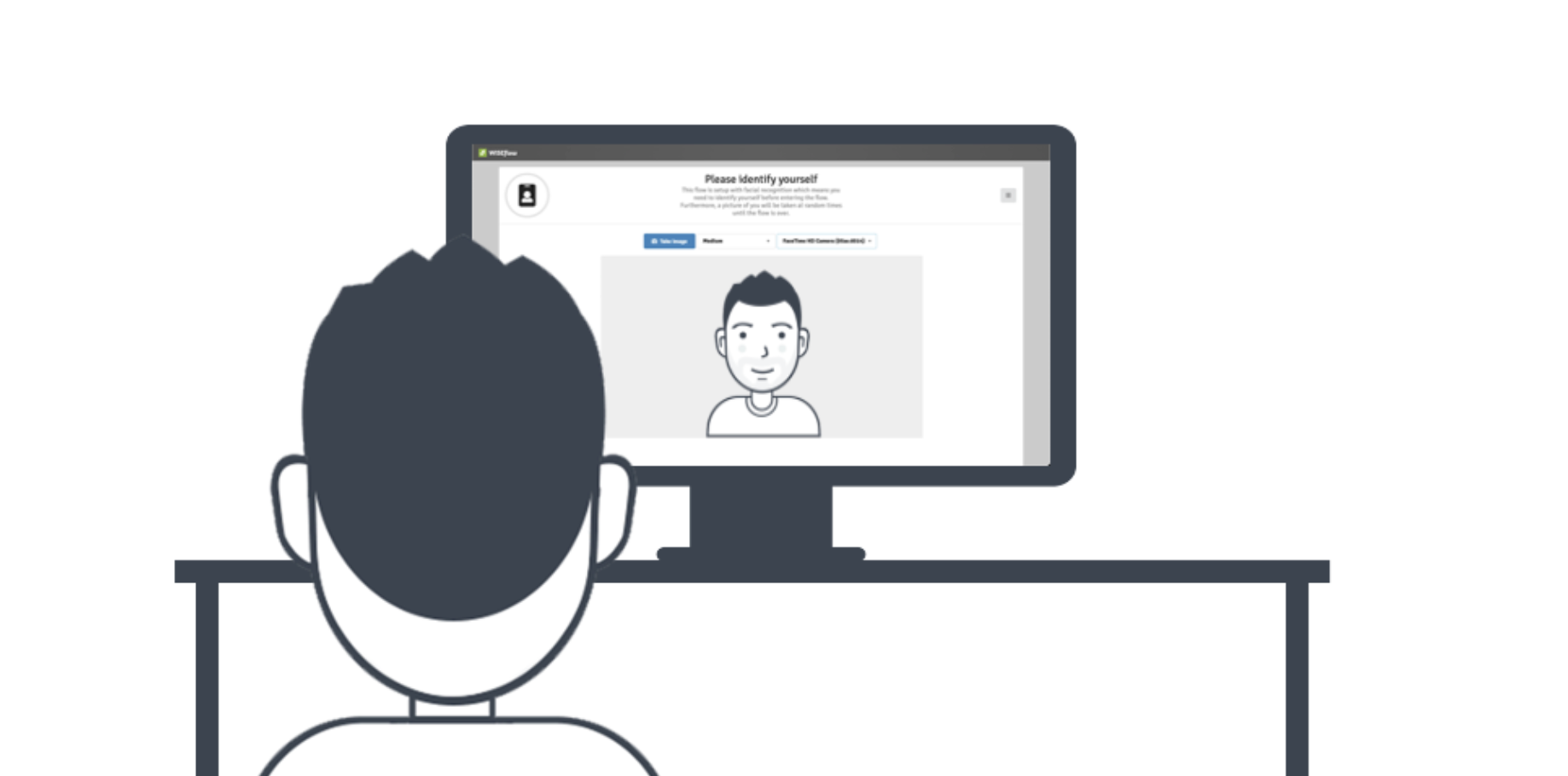
The use of facial comparison technology combined with the COVID-19 pandemic has led to a widespread debate within the education community as to what extent surveillance and privacy invasion is reasonable in order for universities to carry out their obligation to ensure fair and credible assessment of students.
The use of online remote proctored exams has caused a stir among students in several countries and sectors not particularly accustomed to such tools. Before Corona, remote proctoring tools were for obvious reasons mainly reserved for distance programs or in the rare instances where individual students were unable to attend the exam at campus physically.
Remote proctoring under pressure
With the sudden lockdown of universities and schools following the virus outbreak, the use of remotely proctored exams seems to have exploded worldwide. Online proctoring providers have stated that the use during Spring of 2020 increased more than 10-fold compared to the previous year. Some of them openly admitting that the support systems have been completely overwhelmed by the increased use and that they have not been able to handle the scale properly. As the majority of the remote online proctoring solutions emphasises the use of remote human invigilators as part of their offerings it is no surprise that many of them quickly ran into scalability issues as the demand far exceeded the supply. Trying to adapt to the demand, it’s fair to assume that some solution providers chose to scale up their service by using new inexperienced or ill-equipped proctors in addition to their usual staff. Particularly in Europe, several examples of proctors sitting in non-European countries has raised concerns of both sensitive biometric data being shared with third parties without proper control and GDPR measures in place.
But the concept of online proctoring itself raises a number of issues and questions that need to be addressed more widely. In essence, online proctoring is based on Foucault’s panoptic model of surveillance - An invisible omniscient who constantly creates anxiety about whether actions are wrong. No matter how it is being presented, it is inevitably unsettling and intimidating to have a stranger observing you close-up through a one-way webcam and perhaps also monitoring your actions on your desktop and listening for sounds in your surroundings. In addition, students during the current virus-outbreak have been confined to their private homes and rooms, without any options to go to “neutral” grounds, so remote proctoring easily becomes invasive and compromises the sanctity of the home. Needless to say, none of this is helping in reducing anxiety among students taking exams.
On the other hand, universities have to maintain a certain level of academic integrity for accreditation and compliance and to the best of their ability to reduce academic dishonesty. And while many argue that several assessment formats could probably be changed into more open book formats and thereby reduce or eliminate the need for proctored environments, this will clearly take time and require much discussion and reflection within the academic faculties and communities. There is no certainty of any guarantee of short-term resolution in this issue.
So, there is little doubt that we will continue to see online proctoring as part of the assessment tool kit going forward. Not least as the technology for facial comparison and deep learning is today widely available and pretty easy to adopt, as major solution providers like Amazon and Microsoft offer it as cloud-based services for anyone to add to their applications.
Therefore, the question is not really whether to proctor or not, but rather how to proctor and how to strike the right balance between the extent of surveillance possible through technology today and the need for credible academic integrity in assessment.
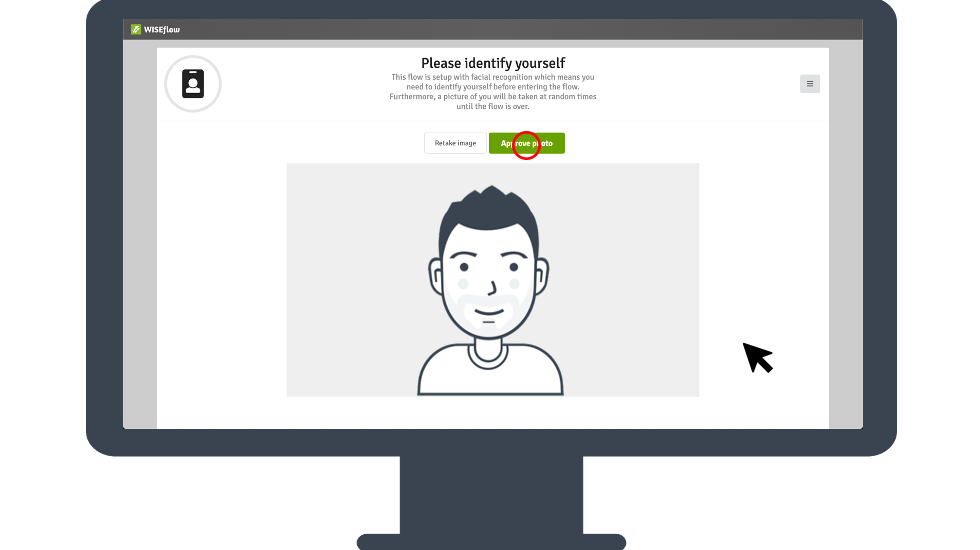
Before initiating an exam with facial comparison in WISEflow, students must confirm their identity
Scaling exam integrity without sacrificing privacy
As we at UNIwise scrambled forces to help our clients during the beginning of the outbreak, we pondered this very question and concluded that a principle of proportionality should first and foremost govern our approach and that we should uphold student rights to privacy as much as possible.
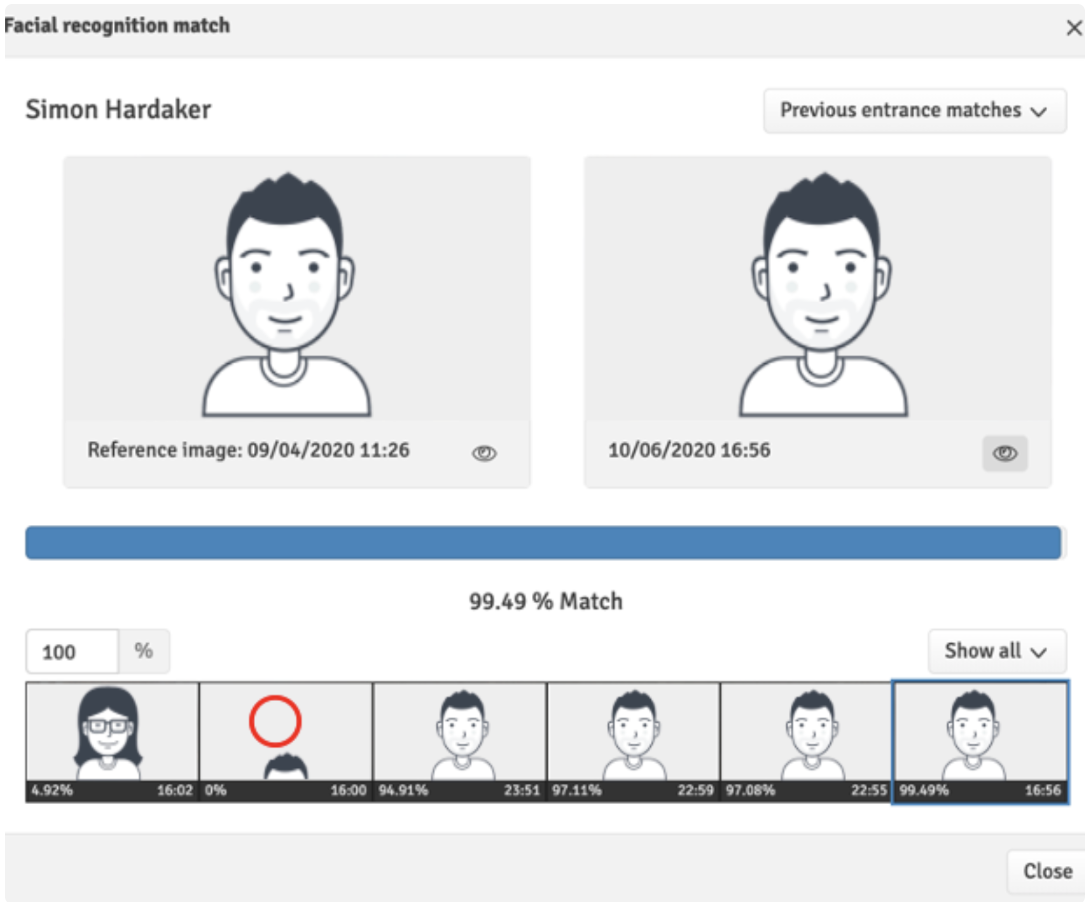
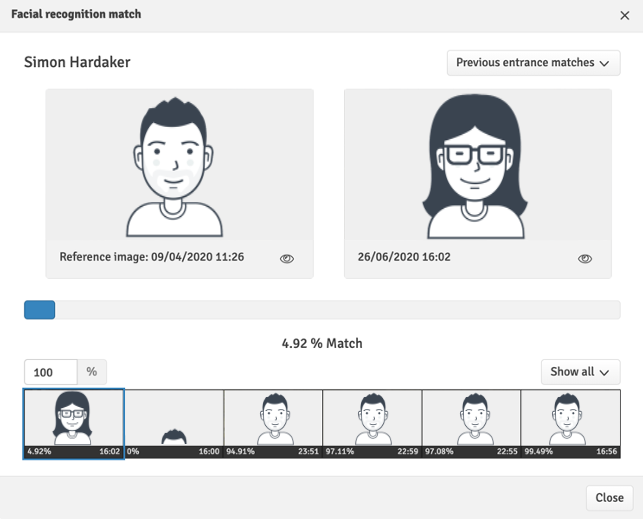
Additionally, our approach needed to be truly scalable in a short time frame and not be reliant on third party human proctors. So, as a direct response to COVID-19, UNIwise released an automated proctoring feature as an additional security layer in addition to the lockdown browser solution already in place. The WISEflow lockdown browser works by securing the student’s workstation by preventing access to unauthorised programs and resources. In short, the principle is to decrease anxiety by instilling the sense that what you can do, you are allowed to do. This technology significantly reduces the need for monitoring, for instance, the desktop or running applications. With the added optional use of collecting images from the student’s webcam at random intervals during the exam session and processing them by a deep neural network model, the software calculates an authenticity score throughout the exam which can then be investigated further after the exam if the score is found to be below a certain level. The available technology also offers the possibility of sound detection and continuously video recordings, but we decided not to include these before having obtained more feedback from our partnering universities as to whether that’s seen as proportionally appropriate or not.
To some, it might still feel intrusive to know that snapshots of your face are being recorded at random during an exam, but it should be felt as much less intrusive than a full-fledged online proctored session where human invigilators are constantly watching and scrutinising the student and all surroundings.
< An example of a good facial comparison match in WISEflow
An example of a poor facial comparison match in WISEflow >
Since the release in early April until mid-June, around 200,000 students sat their exam in WISEflow with the new automated proctoring feature enabled by their institution. During the same period more than 900,000 in total sat exams in WISEflow, making it the fastest module roll-out in WISEflow so far.
Going forward, we will evaluate and discuss with our partner institutions whether the right level of proportionality is applied and how we can support the needs of the community. But we believe there is no doubt that online proctoring is here to stay. The question is about how and when it is applied.
We are here to help
Whether you are just starting with digital assessment or want to get more out of it, we are happy to share how other institutions run it in practice. Please reach out or request a demo.

Frequently asked questions
When COVID‑19 forced universities to close campuses, institutions had to move summative assessments online at speed. This sudden shift led to a global surge in remote‑proctored exams and raised questions about privacy, fairness, and the extent of digital surveillance needed to uphold academic integrity.
Students expressed discomfort with being monitored in their private homes, anxiety about being watched by human invigilators, and concerns about how biometric data (photos, audio, video) was stored or shared—especially when proctors were located outside Europe.
Human invigilation doesn’t scale well. With demand rising more than ten‑fold in Spring 2020, many providers were overwhelmed, resorting to inexperienced or overseas proctors, raising security gaps, privacy concerns, and compliance issues with GDPR and data‑transfer rules.
UNIwise follows a principle of proportionality, prioritising student privacy while supporting academic integrity. WISEflow uses automated proctoring, identity checks, randomised webcam snapshots, and an authenticity score, without relying on intrusive human monitoring or continuous video surveillance.
Instead of watching students live, WISEflow captures a limited number of still images during the exam and compares them using facial‑comparison AI. This method drastically reduces surveillance intensity while still flagging anomalies for post‑exam review by the institution.
Yes. The blog concludes that remote proctoring is here to stay, not as a blanket solution, but as one tool among many. The key question for institutions is how and when to apply proctoring appropriately, balancing privacy, proportionality, and exam integrity.