
Why higher education needs a dedicated exams and assessment platform – built for fairness, consistency and learning
Why universities need an assessment platform built for fairness, consistency, accessibility, security and learning, aligned with ESG, GDPR and UDL.
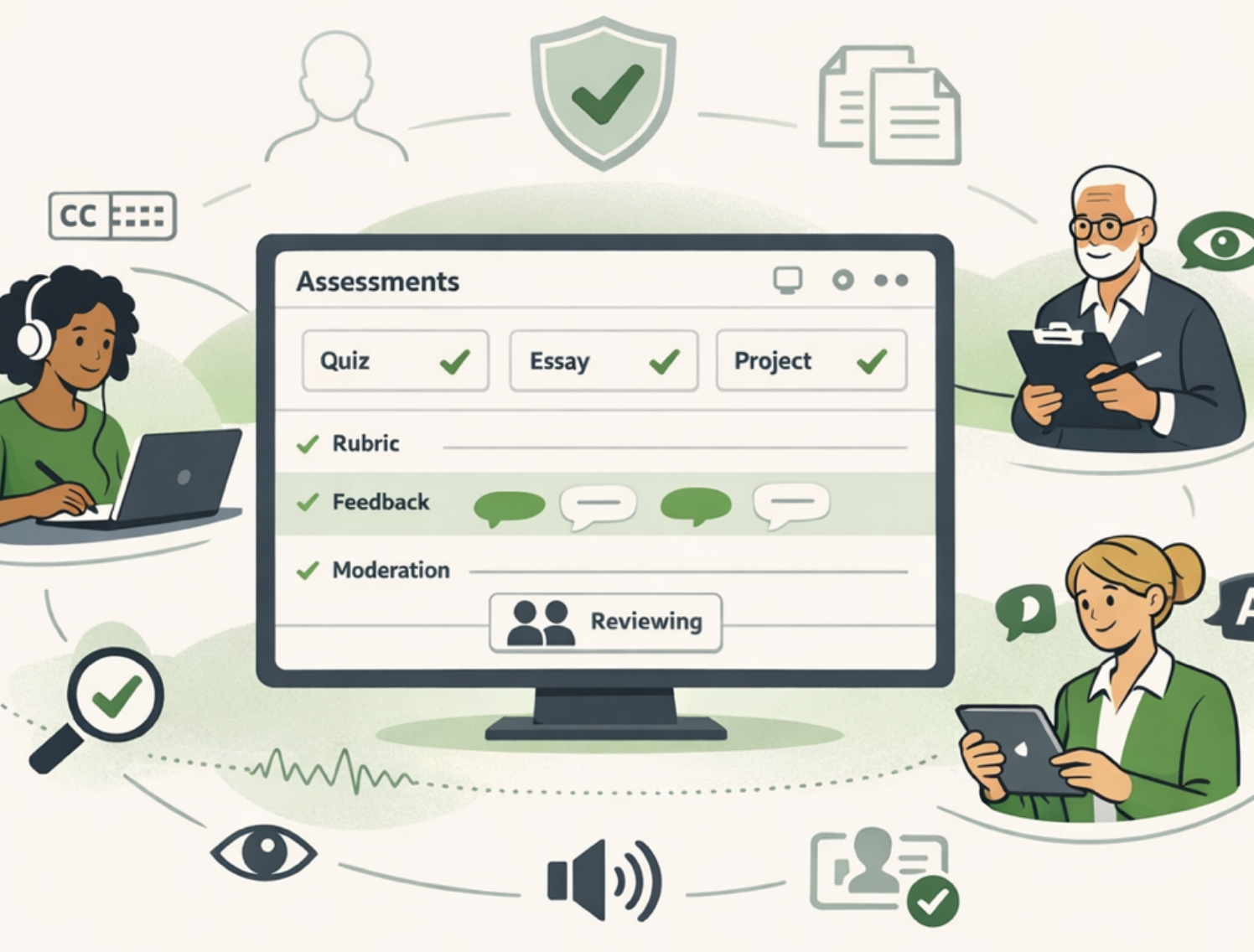
Across universities and colleges, assessment is not a sideshow, it is the backbone of progression decisions, quality assurance and institutional accountability. Transnational frameworks and communities across the European Higher Education Area emphasise student-centred learning, robust information management and continuous enhancement through internal and external quality assurance. The Standards and Guidelines for Quality Assurance in the European Higher Education Area (ESG) articulate these expectations, while EUA’s Trends 2024 shows institutions rethinking assessment design, digital readiness and inclusion.
That is precisely why exams and assessments deserve a dedicated digital platform, one born of higher education practice, deeply aligned to academic and administrative workflows, and capable of delivering learning value alongside operational assurance.
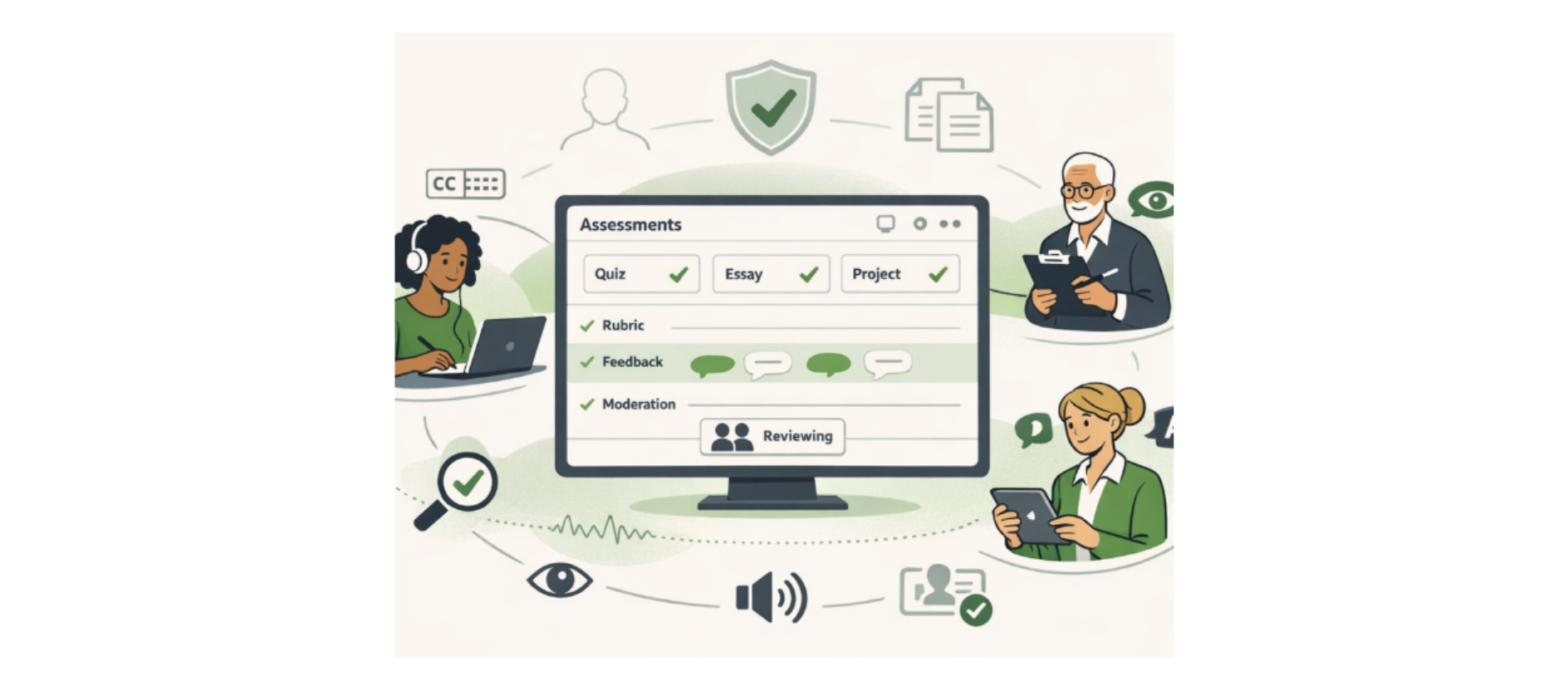
Assessment is not "just another module"
When assessment is treated as an add-on to generic systems, institutions encounter avoidable limits, fragmented workflows, brittle moderation, uneven feedback and accessibility gaps. The ESG stress student-centred learning and periodic review, the practical reality is that these principles are difficult to honour without tools designed to operationalise them end-to-end. EUA’s latest sector analysis points in the same direction, more programme-level redesign, more flexibility for students, and stronger support for teachers engaging in learning and teaching enhancement.
Fairness and consistency - by design
A dedicated platform should hardwire fairness and consistency into the lifecycle:
Anonymity and impartiality
Configurable anonymity, double-blind marking, calibrated moderation, multiple marking instances and structured workflows reduce bias and strengthen confidence in outcomes.
Structured, learning-oriented feedback
Rubrics, inline annotations and cohort-level feedback promote clarity and comparability so feedback closes the loop on learning rather than merely recording grades.
Data and quality assurance
Role-aware dashboards, audit trails and integrations make it feasible to monitor engagement with feedback, consistency of marking and overall assessment health against institutional policy and ESGaligned processes.
Accessibility and inclusive design
Assessment must work for all students, by default, not by exception. The WCAG 2.2 recommendation strengthens requirements around navigation, predictability and error prevention, a practical baseline for accessible digital assessment services. Complement this with Universal Design for Learning (UDL) 3.0, a research-based framework to design assessments that reduce barriers from the outset and honour diverse identities and ways of knowing. A dedicated platform should embed accessibility and UDLfriendly authoring so inclusive assessment is the norm.
Security, privacy and GDPR - without compromise
Assessment workflows handle sensitive personal data, sometimes special-category data for accommodations, and occasionally integrity signals where institutions choose to use them. The GDPR makes obligations unambiguous, privacy by design, clear roles and responsibilities, proportionate processing, and transparent retention. A dedicated platform must support controllers with DPIAs, granular settings and human oversight, especially where AIenabled features are considered.
WISEflow – purpose-built for higher education assessment
WISEflow was conceived in the higher education sector to manage the entire assessment and feedback lifecycle – from design and delivery to marking, moderation and feedback, across formats ranging from essays and MCQs to oral and practical exams. It combines pedagogical depth with operational rigour, anonymity controls, moderation structures, grading schemes, participation monitoring and scalable operations in peak seasons, and integrates via open APIs with the wider institutional ecosystem.

Integrity controls - layered, configurable, proportionate
Where high-stakes conditions are required, WISEflow supports assessment integrity through a layered, configurable model, from secure device lockdown and environment controls, through monitoring signals that surface anomalous behaviour, to optional identity assurance (e.g., facial comparison) and originality checking to protect authorship. Institutions select the combination and intensity per assessment, guided by documented governance, transparency notices and DPIAs, with conservative data retention and human adjudication for any flags. Controls span pre-exam checks, protected delivery, invigilator support and post-exam audit, preserving fairness and trust at scale while respecting privacy.
Giving freedom back - while securing oversight
A dedicated platform should liberate academics to design authentic assessment and constructive feedback, and liberate students to demonstrate learning in equitable, well-supported ways. At the same time, it should strengthen administrative oversight, consistent workflows, policy-aligned controls, transparent moderation and compliance that stands up to audit. This dual focus - pedagogical quality and operational assurance - is where WISEflow differentiates.
Looking ahead - AI with guardrails, assessment with purpose
AI will keep reshaping assessment and feedback, but education needs a humancentred approach. UNESCO’s guidance is clear, deploy generative AI ethically, protect data privacy and keep humans in the loop. WISEflow helps institutions pilot AIassisted feedback within transparent policies and controls that safeguard academic integrity and student trust.
Focus is on accelerating high-quality, consistent feedback while keeping academic judgment firmly with educators. The design principle is clear, AI in WISEflow acts as assistance, not as a hidden or automatic decision-maker. Suggestions are transparent to markers, reviewable and editable, no grades are issued or changed without human intent, and all interactions are governed by institutional policies, DPIAs and clear notices to staff and students. This humancentred approach aligns with sector guidance on ethical, explainable use of AI in education.
Further reading - transnational references
- ESG – Standards and Guidelines for Quality Assurance in the EHEA – official text and overview. (https://www.enqa.eu/esg-standards-and-guidelines-for-quality-assurance-in-the-european-higher-education-area/)
- EUA Trends 2024 – sector analysis on change, student-centred learning and digital transformation. (https://www.eua.eu/publications/reports/trends-2024.html)
- WCAG 2.2 – W3C Recommendation for accessible digital services. (https://www.w3.org/TR/WCAG22/)
- GDPR – EU data protection framework and explainer. (https://commission.europa.eu/law/law-topic/data-protection/data-protection-explained_en)
- UNESCO – Guidance for generative AI in education and research – humancentred guardrails. (https://www.unesco.org/en/articles/guidance-generative-ai-education-and-research)
- UDL Guidelines 3.0 (CAST) – inclusive design for learning and assessment. (https://udlguidelines.cast.org/more/about-guidelines-3-0/ )
Frequently asked questions
Assessment is central to progression, quality assurance and accountability in universities. Generic systems often fail to support academic workflows, fair marking, accessibility demands and institutional reporting. A dedicated platform ensures assessments are consistent, robust and aligned with sector standards like the ESG.
It embeds fairness directly into assessment processes through features like anonymity, double‑blind marking, structured moderation, rubrics, and audit trails. These reduce bias, support academic judgment and strengthen trust in outcomes.
Inclusive design is essential. A dedicated platform supports WCAG 2.2 standards and Universal Design for Learning (UDL) principles, ensuring assessments work for all students by default—covering navigation, predictability, feedback formats and multiple ways of demonstrating learning.
It provides privacy‑by‑design features like clear data roles, granular permissions, secure processing, transparency notices, and support for DPIAs. This is particularly important when handling sensitive data related to accommodations or integrity checks.
WISEflow is purpose-built for the entire exam and feedback lifecycle, from design and delivery to grading and moderation. It supports diverse assessment formats, integrates with campus systems, manages peak exam periods at scale, and offers advanced fairness, integrity and accessibility controls.
WISEflow uses AI as a transparent assistant, not an automated decision-maker. Suggestions are reviewable, never issue grades automatically, and must align with institutional policies and DPIAs. This follows UNESCO’s guidance for human‑centred, ethical AI use in education.